


DOWNLOAD THE FULL ARTICLE HERE
Zinc coatings are vital to ensuring steel durability, they provide a sacrificial shield that guards against corrosion and extends the product’s lifespan. Unfortunately, some imported products have lower zinc coatings to cut costs, leading to faster corrosion and shorter product life.
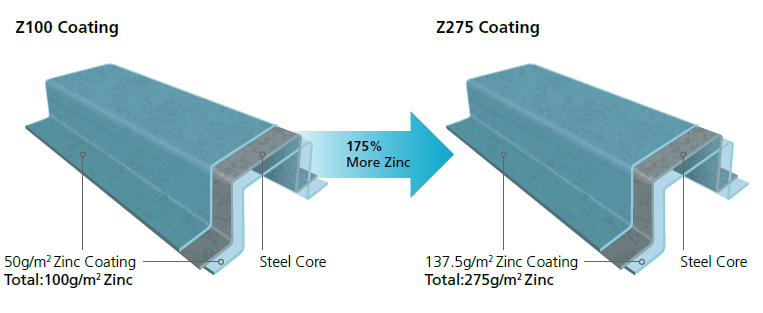
Over a 24-month investigation, majority of the imported steel products we tested had a Z100 zinc coating, while Rondo steel products are typically supplied as Z275.
Z275 contains 175 g/m² more zinc than Z100, equating to 175% greater zinc protection. This additional coating thickness provides substantially enhanced corrosion resistance, particularly in environments subject to moisture and condensation.
New Zealand Standards recommend a minimum coating of Z180 for internal ceilings greater than 300m from breaking surf and a minimum of Z275 should be used for external ceilings more than 1km from salt water.
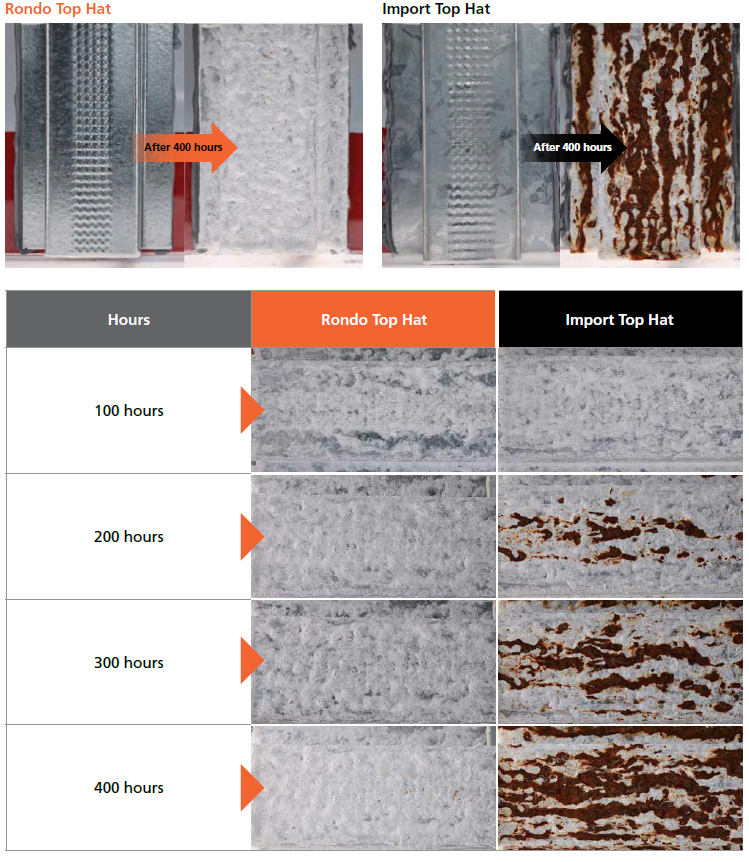
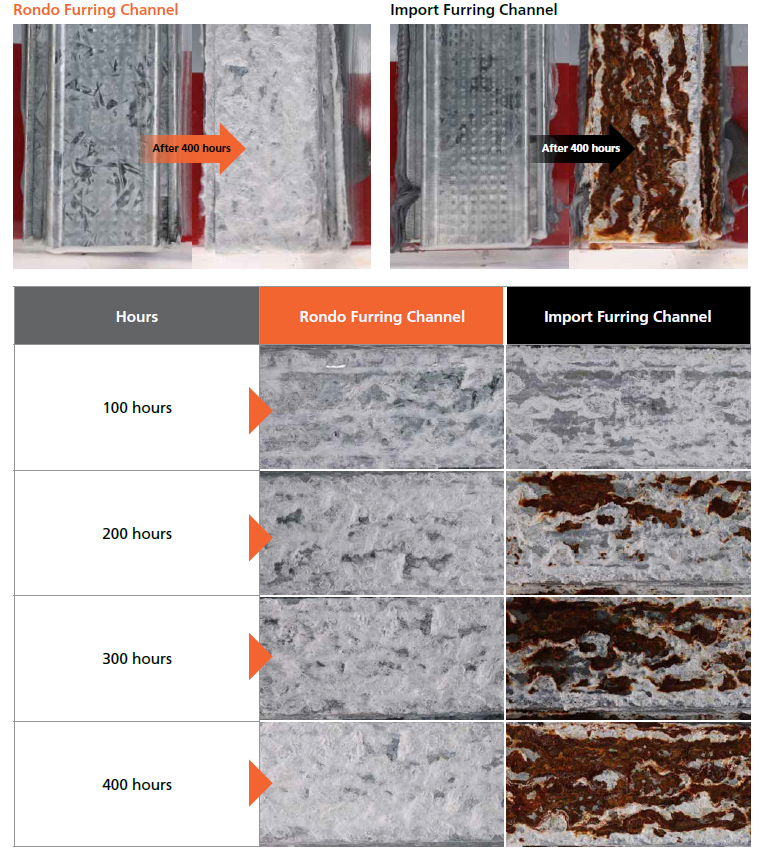
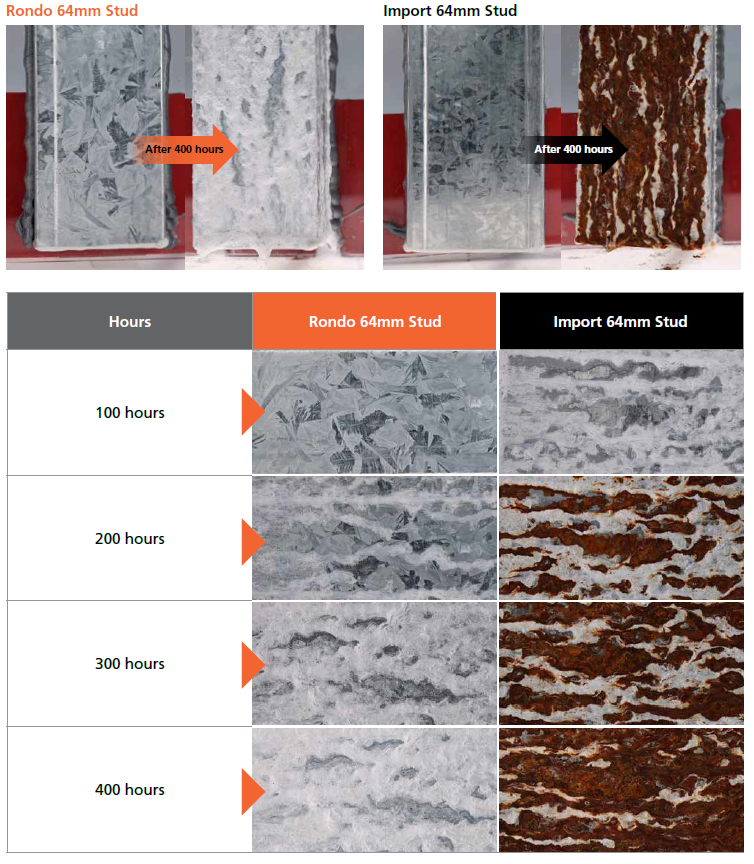
To show performance differences, we completed accelerated corrosion testing where a continuous salt mist was sprayed onto both Rondo and imported steel components, with images captured at consistent intervals.
The result:
• Red rust appeared on imported steel products within 200 hours
• Significant corrosion on imported steel products by 400 hours
• Rondo samples showed no visible red rust over the same period
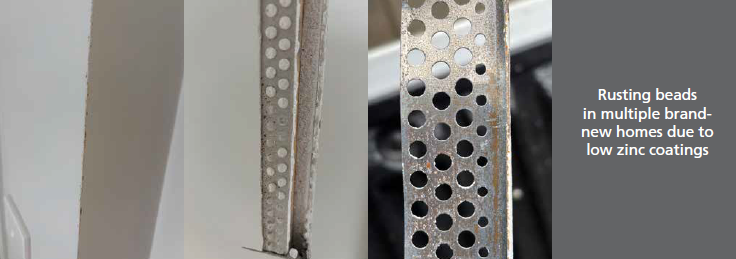
Rusting Beads in brand new homes causing rework costs
We were recently contacted about multiple new homes where imported corner beads were rusting through finished walls. Our testing found the products had a thin Z70 zinc coating, and in some areas, the coating had been completely removed during manufacture, leaving no protection against corrosion across parts of the bead.
The performance implications of low zinc coated products
We recently completed Accelerated Corrosive Environmental Testing at an independent laboratory. In this test, a continuous salt mist was sprayed onto both Rondo and imported steel components, with images captured at consistent intervals.
Even before testing commenced, the imported steel samples showed visible surface defects. By 200 hours, red rust had already formed on the imported steel due to coating failure, and by 400 hours significant corrosion was evident. In contrast, the Rondo samples displayed no visible red rust over the same testing period.
To explore detailed findings on how coating failure impacts real-world building performance, click here.